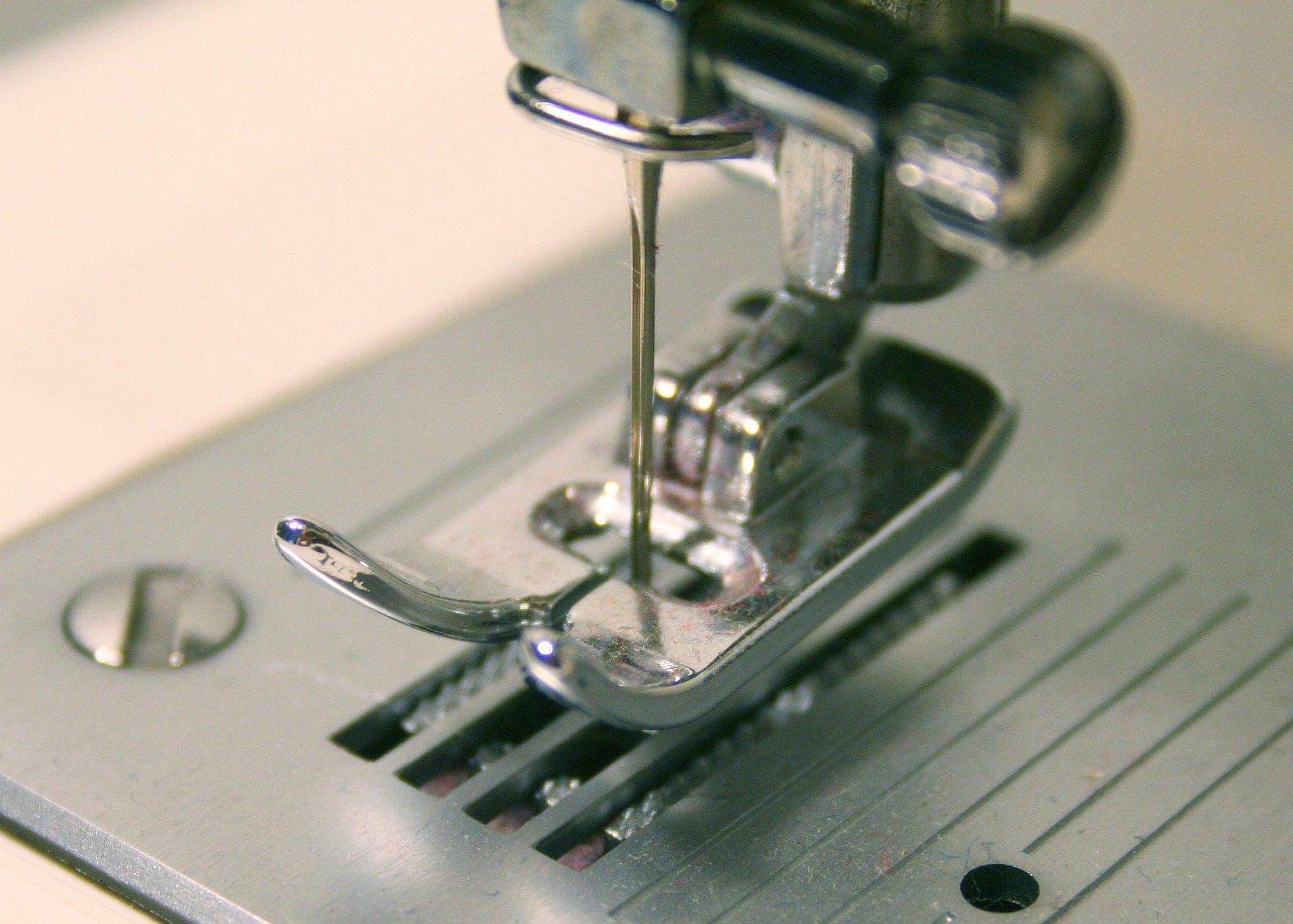
Industrial Sewing Machine Parts: Keeping Production Equipment Running Reliably
Industrial sewing machines are designed to operate for long periods in demanding production environments, but their reliability depends on numerous individual components working together accurately. Needles, hooks, bobbins, feed mechanisms, presser feet, belts and motors can all influence how effectively a machine performs. Some components are routine consumables, while others may remain in service for years before requiring attention.
Understanding Industrial Sewing Machine Parts can help manufacturers and sewing businesses maintain equipment more effectively, diagnose developing problems and reduce unnecessary production downtime. Rather than waiting until a machine stops completely, regular inspection and timely replacement of worn components can help preserve stitch quality and keep production moving consistently.
Industrial sewing equipment is often highly specialised, which makes correct identification particularly important when replacement parts are required. Two machines that appear similar may use different needle systems, bobbin sizes, hooks or feed components. The manufacturer, model number and exact machine specification should therefore normally be established before ordering replacement components.
This becomes particularly important for factories operating a mixture of equipment. A production floor may contain lockstitch, overlock, walking-foot and specialist machines from several manufacturers, each requiring different parts and consumables. Maintaining accurate machine records can make routine ordering considerably easier and reduce the possibility of an incorrect component being fitted.
Needles are among the most frequently replaced parts. Although relatively inexpensive, they have a major influence on sewing performance. The correct needle needs to suit both the machine and the material being sewn, with different point designs and sizes available for different applications. A needle used for lightweight textiles may be unsuitable for leather, upholstery or other heavy materials.
Needles gradually become worn and can also bend or suffer damage during operation. Continuing to sew with a damaged needle can result in skipped stitches, thread breakage or damage to the material. In high-volume manufacturing, replacing needles according to an established schedule can sometimes be more efficient than waiting for visible sewing problems to develop.
Components That Influence Stitch Quality
The bobbin and hook area contains several components fundamental to stitch formation. On a lockstitch machine, the upper thread and bobbin thread need to interact precisely to create a consistent stitch. Wear, contamination or incorrect adjustment within this area can therefore become immediately visible in the finished seam.
Bobbins themselves need to be compatible with the machine. Small differences in dimensions can affect operation, so using a bobbin simply because it appears to fit is not always appropriate. Bobbin cases can also experience wear and may require replacement if damaged or no longer controlling thread correctly.
Rotary hooks and associated components operate at high speed and rely on accurate timing relative to the needle. If timing is incorrect, the machine may begin skipping stitches or fail to form them consistently. Damage caused by a needle strike can also affect the hook surface and interfere with smooth thread movement.
Feed components are equally important because good stitching depends on moving the material through the machine consistently. Feed dogs, presser feet and related mechanisms work together to control the fabric while the stitch is being formed. Wear or inappropriate setup can result in uneven stitch length, material movement or difficulty feeding heavier layers.
Different presser feet can also adapt machinery to particular manufacturing tasks. Standard feet may be suitable for general sewing, while specialist designs can assist with piping, zips, narrow seams and other operations. In production environments where the same task is repeated continuously, choosing an appropriate foot or attachment can improve both accuracy and operator efficiency.
Walking-foot and compound-feed machines contain additional moving components because they are designed to control demanding materials more positively. These mechanisms can be particularly useful when sewing leather, upholstery, canvas or several layers that might otherwise move independently. Their additional mechanical complexity also means that wear within the feeding system can noticeably affect performance.
Motors, Belts and Long-Term Machine Maintenance
Not all Industrial Sewing Machine Parts are located around the needle and sewing head. The drive system is equally important because it transfers power to the machine and allows the operator to control sewing speed.
Industrial machines may use different motor arrangements depending on their age and specification. Servo motors are widely used where responsive speed control and efficient operation are desirable, while older installations may use traditional clutch motors. Motors, controllers, switches and associated electrical components should be appropriately matched to the machine and installation.
Drive belts are comparatively simple components but can have a significant effect on operation. A worn, damaged or incorrectly tensioned belt may slip, create vibration or prevent power from being transferred smoothly. Periodic inspection can identify deterioration before the belt fails completely during production.
Foot pedals, linkages and control mechanisms also experience repeated use. An operator working a full production shift can operate these controls thousands of times, so wear can gradually affect responsiveness. Keeping mechanical linkages correctly adjusted can help maintain predictable control of the machine.
Lubrication systems deserve similar attention. Industrial sewing equipment contains rapidly moving metal components that depend on appropriate lubrication to minimise wear and heat. Some machines use automatic oiling systems, while others require manual lubrication at specified points. Filters, oil reservoirs, pumps and associated components can consequently form part of the maintenance requirements.
Using the correct lubricant is important. Industrial sewing machinery should be maintained according to the manufacturer's recommendations rather than assuming that any general-purpose oil will be suitable. Oil contamination or insufficient lubrication can shorten component life and potentially lead to more substantial mechanical problems.
Regular cleaning can be just as important as replacing parts. Sewing generates lint, thread fragments and textile fibres that can accumulate around feed dogs, bobbin areas and other moving mechanisms. In certain production environments, this contamination can build rapidly because machines operate continuously.
Compressed air is sometimes used around industrial equipment, but cleaning methods should follow the relevant machine guidance because simply forcing debris deeper into mechanisms may create additional problems. Accessible lint and waste should be removed as part of a planned maintenance routine.
Replacement parts become particularly important when production depends heavily on a small number of specialist machines. If a commonly used lockstitch machine fails, another machine may potentially take over its work. If the factory's only specialist machine fails, however, an entire stage of production can stop.
For this reason, manufacturers can benefit from identifying production-critical equipment and maintaining an appropriate stock of frequently required parts. Needles, bobbins, belts and other common consumables are obvious examples, but the appropriate inventory depends on the machinery being operated and how quickly additional parts can be obtained.
There is little benefit in keeping every possible component in stock. Expensive assemblies that rarely fail may be better sourced when required, while inexpensive parts with predictable replacement cycles can be kept readily available. Maintenance records can help businesses determine which components are actually being consumed and which faults occur repeatedly.
Machine documentation is valuable when identifying replacements. Model numbers, serial information, parts diagrams and technical manuals can help distinguish between visually similar components. Where machinery has been modified during its working life, records of those changes can become particularly useful.
The quality of replacement components should also be considered. Industrial machinery operates at substantial speeds and relies on accurate tolerances between moving parts. A component that is dimensionally incorrect can potentially create additional wear or interfere with stitch formation even if it can physically be installed.
Maintenance personnel should therefore investigate the cause of repeated failures rather than simply replacing the same component continuously. A repeatedly broken needle, for example, could indicate incorrect needle selection, operator technique, machine timing or another mechanical problem. Replacing the needle addresses the immediate failure but not necessarily its underlying cause.
The same principle applies to thread breakage, inconsistent feeding and premature belt wear. Recurring problems can provide useful diagnostic information about machine setup or maintenance requirements.
Operator observations can contribute significantly to preventative maintenance. Someone using the same sewing machine every day is likely to notice subtle changes in sound, vibration, control or stitch quality before the machine stops working completely. Reporting these changes early gives maintenance personnel an opportunity to inspect equipment during planned downtime.
As industrial sewing machinery becomes more automated, the range of replacement components can extend beyond conventional mechanical parts. Sensors, electronic controls, displays, actuators and programmable systems may all form part of modern production equipment. Maintenance teams therefore increasingly require an understanding of both mechanical and electronic systems.
This makes accurate diagnostics particularly important. Replacing mechanical parts repeatedly will not resolve a problem originating from a sensor or electronic control system, just as replacing an electrical component will not correct a poorly adjusted mechanical feed.
Ultimately, Industrial Sewing Machine Parts play an essential role in maintaining reliable production equipment. From everyday consumables such as needles and bobbins to hooks, feed mechanisms, belts, motors and electronic components, each part contributes to the performance of the complete machine. Correct identification, preventative maintenance and sensible spare-parts management can help manufacturers maintain stitch quality while reducing avoidable production interruptions.

Connect With Link Meta
Let’s Talk Structure and Strategy