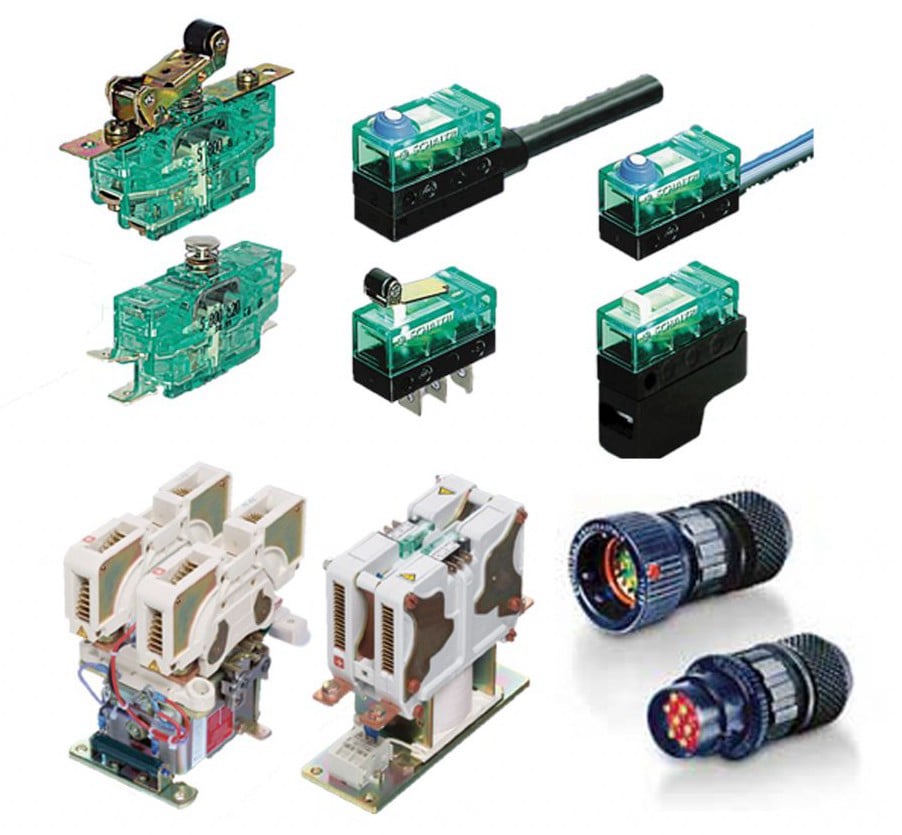
Schaltbau Snap Action Switches: How Precision Switching Supports Reliable Equipment Design
Reliable electrical control often depends on very small components performing consistently over long periods of time. In industrial machinery, transportation equipment and automated systems, switches are frequently used to detect position, confirm movement and provide status information to a wider control system. When these components operate repeatedly in demanding conditions, mechanical precision and electrical reliability become critical parts of the design.
Schaltbau Snap Action Switches are used in applications where a rapid and repeatable change of electrical contact state is required once a mechanical actuator reaches a defined position. The snap action mechanism allows the internal contacts to change state quickly, even if the external movement is comparatively slow. This helps create predictable switching behaviour across a wide range of mechanical operating conditions.
How Snap Action Switching Works
A snap action switch uses a spring-loaded internal mechanism that stores mechanical energy as the actuator is moved.
Once the actuator reaches a specific operating point, the mechanism releases that stored energy and moves the electrical contacts rapidly from one state to another.
This means the speed of the internal contact movement is largely independent of the speed of the external actuator.
A slowly moving mechanical lever can therefore still produce a fast electrical switching event.
Why Consistent Switching Matters
In many control systems, the precise point at which a switch changes state is important.
If the switching point varies significantly from one cycle to another, the control system may receive inconsistent information about the position of a moving component.
Snap action mechanisms are designed to provide repeatable operation around a defined mechanical point.
This can improve the consistency of position monitoring and control functions.
Position Detection in Mechanical Systems
One of the most common uses for snap action switches is detecting the position of moving equipment.
A switch may be installed so that a lever, door, linkage or actuator presses against it when a particular position is reached.
The switch then sends an electrical signal confirming that the movement has occurred.
This information can be used by control systems to determine whether equipment is operating correctly.
Industrial Automation Applications
Automated machinery often contains many individual moving components.
Conveyors, guards, actuators, clamps, robotic assemblies and processing equipment may all require position feedback.
A snap action switch can provide a simple mechanical method of confirming that a component has moved into the expected location.
This signal may then be used within a larger control sequence.
Transportation Equipment
Transportation systems present especially demanding operating environments.
Rail vehicles and other specialist equipment can be subjected to continuous vibration, repeated mechanical shock and significant temperature changes.
Switches installed in these applications may also operate many thousands or millions of times throughout the service life of the vehicle.
Mechanical durability and secure installation therefore become important design considerations.
Different Actuator Designs
The actuator is the part of the switch that interacts with the external mechanical system.
Different applications require different actuator arrangements.
A direct plunger may be suitable where a component pushes directly against the switch.
Lever actuators provide additional travel and can respond to movement occurring slightly further away from the switch body.
Roller levers are particularly useful where a moving component passes across the actuator surface.
Choosing the correct actuator style helps reduce unnecessary mechanical stress while ensuring reliable operation.
Operating Force
Every switch requires a certain amount of force to operate.
If the mechanical system does not provide sufficient force, the switch may fail to change state consistently.
Excessive force can also cause problems by increasing mechanical wear or damaging the actuator.
The operating force should therefore be considered during mechanical design.
The goal is to provide enough movement and force for reliable operation without unnecessarily overloading the switch.
Understanding Overtravel
Once the switch reaches its operating point, the actuator may continue moving slightly further.
This additional movement is known as overtravel.
A controlled amount of overtravel can help compensate for manufacturing tolerances and mechanical movement.
However, excessive overtravel can place unnecessary stress on the switch.
Equipment designers should therefore ensure that actuator movement remains within the specified limits.
Contact Configurations
Snap action switches can be available with different electrical contact arrangements.
Normally open contacts remain open until the switch is operated.
Normally closed contacts remain closed until operation.
Changeover contacts allow one circuit to open while another closes.
The most appropriate configuration depends on the function required within the control system.
Switching Electrical Loads
The electrical load being controlled is just as important as the mechanical operation.
Voltage and current ratings must be appropriate for the circuit.
Different load types can also behave differently when switched.
Inductive loads, for example, may create higher electrical stress than a purely resistive load.
Engineers should therefore consider the actual circuit characteristics rather than relying only on nominal current ratings.
Signal-Level Applications
Some switches are used for relatively low-current signalling rather than controlling larger electrical loads.
In these applications, contact quality and resistance can become especially important.
Small electrical signals may be more sensitive to contamination or poor contact conditions.
The selected contact materials and switch design should therefore match the intended electrical application.
Mechanical Endurance
Switches used in repetitive machinery can accumulate enormous numbers of operating cycles.
Mechanical endurance describes how many operations the mechanism is designed to withstand under specified conditions.
This value can differ from electrical endurance because switching current causes additional wear at the contacts.
Both mechanical and electrical life should be reviewed when predicting long-term performance.
Vibration Resistance
Vibration can create several challenges.
A poorly mounted switch may move relative to its actuator, changing the operating point.
In severe cases, vibration could potentially cause unintended movement within the mechanism.
Secure mounting and appropriate component selection help maintain predictable switching in demanding environments.
This is particularly relevant in rail, automotive and heavy industrial applications.
Environmental Protection
Industrial switches may operate in environments containing dust, moisture, oils or other contaminants.
The level of protection required depends on where the switch is installed.
A switch mounted inside a sealed control enclosure may require less environmental protection than one positioned close to moving machinery.
Temperature range should also be considered because material behaviour and electrical performance can change under extreme conditions.
Integration with Control Systems
A snap action switch rarely operates in isolation.
Its output normally feeds into a wider electrical or electronic system.
This may include relays, programmable logic controllers, monitoring systems or safety circuitry.
Designers should ensure that the switch output is electrically compatible with the connected equipment.
Clear wiring diagrams and identification also help technicians understand how the switch interacts with the wider system.
Using Switches for Sequence Control
Mechanical switches can help coordinate the order in which machinery operates.
For example, one stage of a machine may need to reach a defined position before the next stage begins.
A snap action switch can confirm that the movement has completed.
The control system can then allow the next operation to proceed.
This type of feedback can improve both reliability and process control.
Supporting Diagnostics
Position switches also provide useful information during fault finding.
If a machine does not complete a sequence, technicians may check whether the associated switch changed state correctly.
This can help distinguish between an electrical fault, mechanical problem or control system issue.
Accessible switches and clearly labelled wiring make this diagnostic process easier.
Mounting Accuracy
Correct mounting is essential.
The switch body must remain secure while the actuator is positioned accurately relative to the moving component.
If the actuator is misaligned, the switch may receive excessive sideways force or operate inconsistently.
Mounting brackets should therefore provide both rigidity and precise positioning.
Maintenance Access
Switches used in long-life equipment should be installed where they can be inspected and replaced without unnecessary dismantling.
Even a highly durable component may eventually require servicing.
Designing for maintenance access can significantly reduce repair time.
This is especially valuable in transportation and industrial applications where equipment downtime can be expensive.
Wiring Connections
Electrical termination should be as reliable as the switch mechanism itself.
Loose wiring can create intermittent faults that may be difficult to diagnose.
Connection methods should therefore be appropriate for the operating environment and expected vibration levels.
Conductors should also be routed so they do not place mechanical strain directly on the switch terminals.
Safety Considerations
Snap action switches may be used within systems that contribute to safety-related functions.
However, the complete safety architecture must determine whether a particular switch is suitable.
Designers should consider redundancy, monitoring, fault detection and relevant safety standards.
A general-purpose switch should never automatically be treated as a safety-rated device without appropriate verification.
Designing for Long-Term Reliability
Switch reliability depends on more than the component itself.
Mechanical alignment, actuator movement, electrical loading, vibration, environmental exposure and maintenance practices all influence service life.
A well-designed system considers these factors together.
This reduces the likelihood of premature failure and improves overall equipment availability.
Ultimately, Schaltbau Snap Action Switches demonstrate how controlled mechanical movement can be converted into fast, repeatable electrical signals for position detection and equipment monitoring. When correctly specified and integrated, snap action switches can support reliable operation across industrial machinery, transportation equipment and automated systems while providing consistent feedback throughout demanding service conditions.

Connect With Link Meta
Let’s Talk Structure and Strategy